
How Arrest Warrants Work in Spartanburg County
Under South Carolina Code §22-5-110, a magistrate may issue an arrest warrant when an officer requests one on a sworn affidavit. The affidavit must show probable cause. The Sheriff's Intake Information page describes that officer-signed process too. It rests on the officer's stated basis and the evidence behind it. Once the court issues the paper, the Sheriff or another authorized agency serves it. The court itself reviews the legal process. For any Spartanburg County warrant, check current status through the official court or law-enforcement channel rather than anywhere else.
South Carolina Warrant Requirements
The statute covers arrest warrants and courtesy summonses for Spartanburg County and the rest of the state. It requires information that identifies the charge and directs a person to court. A non-law-enforcement affiant generally goes the summons route instead of asking directly for an arrest warrant. The exact form depends on the case. The law text itself sets out those requirements.
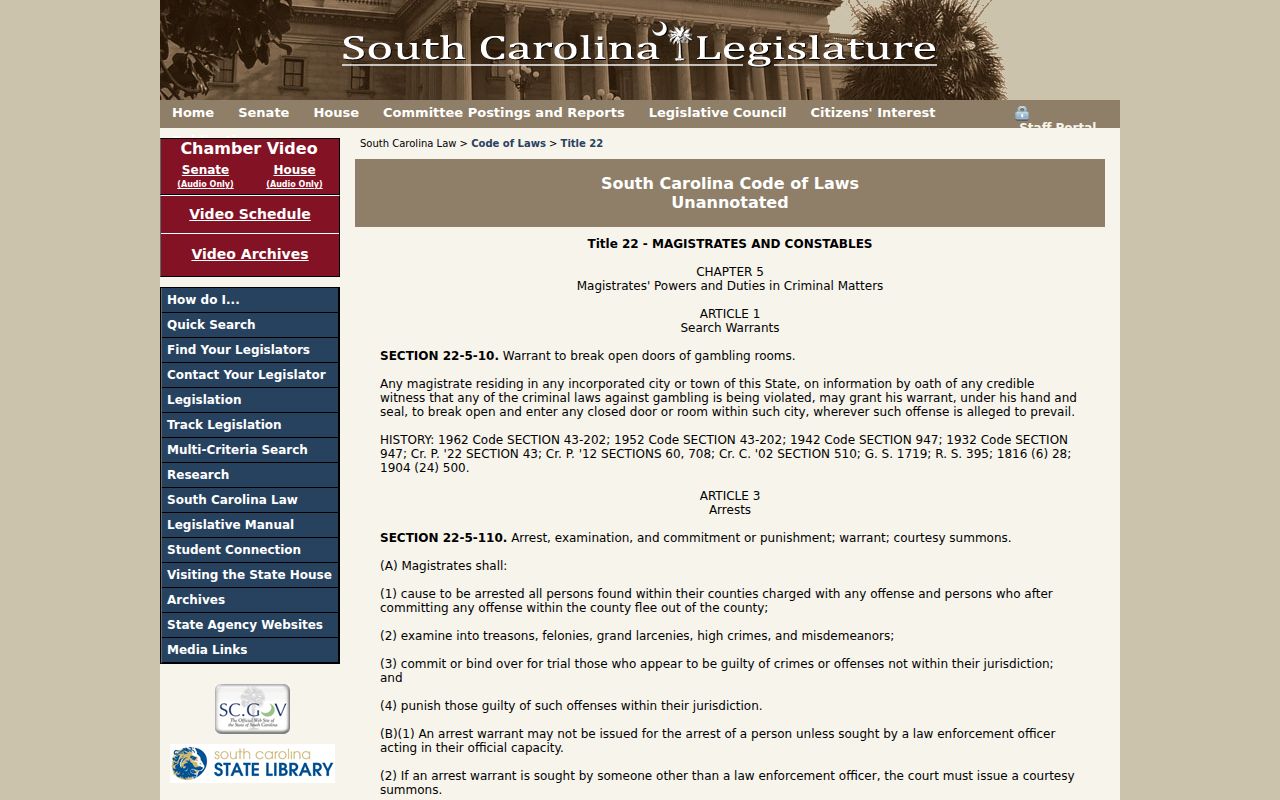
Read South Carolina Code, Chapter 22-5 for the full statute. A lawyer can explain how it applies to a Spartanburg County matter.
Arrest Warrants: What They Contain
Spartanburg County publishes no sample arrest warrant. A permitted copy may still show typical fields. Think issuing court, case reference, charge, and issue date. Service or return information and the issuing official may appear too, subject to redaction and access limits. These are common elements, not a promise about every record.
| Process number | Reference used by the court or agency. SC-EXAMPLE-004, schema only |
|---|---|
| Issuing court | Names the judicial office that can address status or release. |
| Charge / statute | May identify the alleged offense and legal section. |
| Affidavit reference | May point to a probable-cause record where public access permits. |
| Service and return | Records a service event when maintained and releasable. |
| Bond / appearance | Ask the court which authority controls current conditions. |
Spartanburg County Service Has Limits
The Sheriff's Warrant Division handles follow-up investigation and service for several Spartanburg County warrant categories. Those include active, bench, Family Court, and General Sessions matters. The Division posts no public warrant-name search or list. Municipal process may fall to city police or another court-authorized agency. The municipal judge still controls the case. To check anything, contact the issuing court first. If the record names the Sheriff, use the official Warrants Office line and confirm which phone contact fits your question.
How Warrants Get Served in Spartanburg County
Once issued, the authorized agency serves or executes the warrant. If an arrest follows, the County's Intake Information explains the initial appearance, bond, booking, and release limits. A Bond Court decision may not resolve a separate hold. General Sessions, Family Court, probation, parole, and federal matters can each stand on their own. Ask the authority named in the paperwork how the person should appear, whether counsel belongs in the room, and which office controls release. Spartanburg County publishes no single voluntary surrender schedule covering every warrant type.
Arrest Process Has Separate Stages
In a Spartanburg County arrest, each stage is its own event. Issuance, service, booking, bond, and later proceedings do not collapse into one. The Sheriff explains that an arrest document or Uniform Traffic Citation may lead into intake and an initial appearance. The court then sets the next authorized step. A payment receipt or an old docket line does not prove every related process ended. If the person is in custody, call Bond Court at 864-596-3424. You can also use the Detention Center route the County publishes, and ask which court or hold controls the case.
Arrest Warrants, Summonses, and Bench Warrants
These terms mark different starts in the court process. A summons orders a person to appear. A bench warrant usually follows a missed court obligation. An arrest warrant rests on authorized probable-cause process. In Spartanburg County, the notice's court name and reference number help you sort which one you face.
| Process | Typical starting point | Where to confirm |
|---|---|---|
| Arrest warrant | Probable-cause request and judicial process | Issuing court and serving agency |
| Summons | Notice to appear under statutory procedure | Court named on the summons |
| Bench warrant | Missed appearance, payment, or order issue | Court that set the obligation |
| Search warrant | Authority to search a place or property | Separate record-access route |
Search Warrants Are Different Records
South Carolina Title 17 Chapter 13 governs criminal procedure for search warrants. A search warrant authorizes a search under its own terms. It is not a public roster of wanted people. Returned warrant papers may follow retention and access rules that differ from arrest warrant records. Never infer a person's warrant status from a search-warrant case or from sealed material. Check the issuing court's public-record rules in Spartanburg County.
Handling an Arrest Warrant in Your Name
If a court or the Sheriff confirms a warrant in your name, ask who can set bond, take an appearance, or consider a recall or other motion. A lawyer can contact the issuing court and explain the case-specific risks. Spartanburg County publishes no universal surrender window or walk-in instruction.
Important: Call the official office before appearing. Ask a lawyer about the safest court process and whether another hold may affect release.
The county overview includes a status and resolution checklist. Keep your official notice and any written Spartanburg County court instructions together.
South Carolina Access Can Be Limited
FOIA opens non-exempt public records, but some law-enforcement material can be withheld or redacted. Juvenile and identifying records are restricted. Expunged or sealed material must not reappear in Spartanburg County as ordinary public warrant information.
Records boundary: S.C. Code §§30-4-15 and 30-4-40 set public-record access and exemptions.
Title 63, Chapter 19 protects juvenile court and identifying law-enforcement records.
The statutory pages explain the rules; the issuing court confirms a particular record's status.
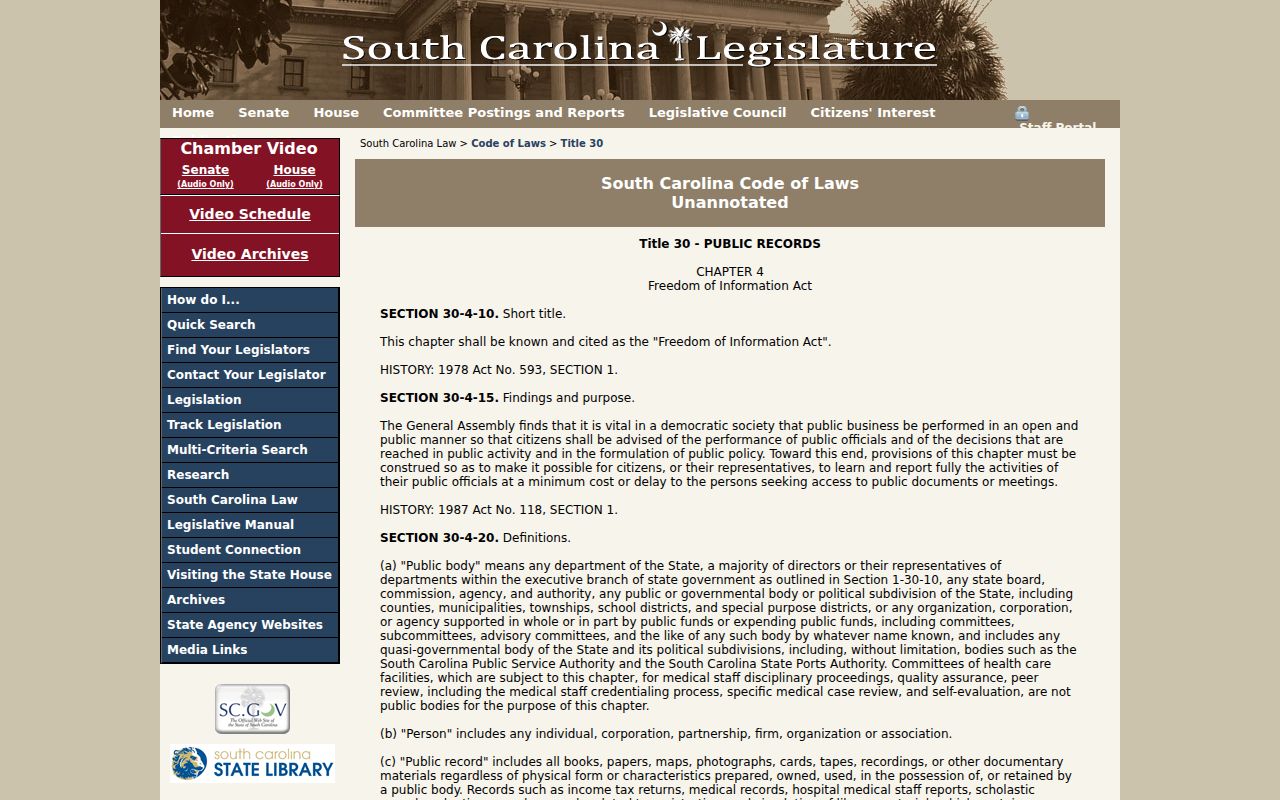
Check the South Carolina FOIA text for current statutory language.